
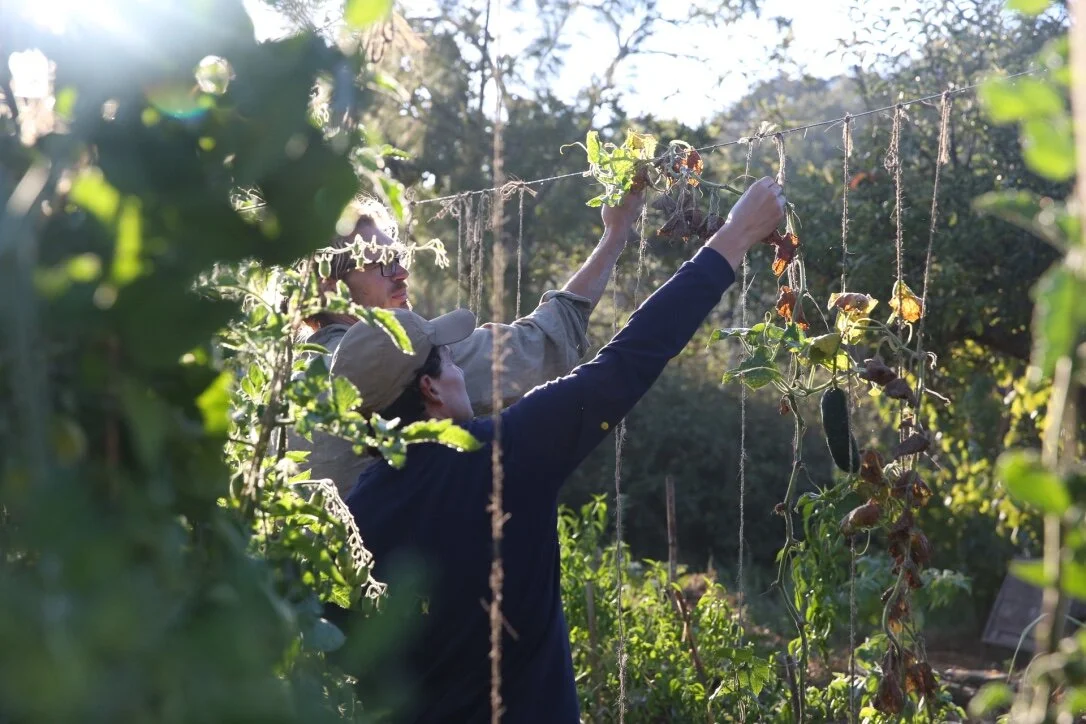
Permaculture Design Course and Permaculture in Practice Experience
Permaculture Design Course
A Quinta and Surplus Permaculture Design are excited to invite you to join us for a two week Permaculture Design Course (PDC) at A Quinta da Lage from the 4th - 20th October 2021
What is a PDC?
A PDC is an internationally recognised, 72-hour theory course resulting in a Permaculture Design Certificate. It provides an introduction to permaculture design as set forth by movement founders Bill Mollison and David Holmgren. The PDC serves as a foundation for further permaculture work and study and is a prerequisite for the Diploma in Permaculture Design, offered through The Permaculture Association and Gaia University. A growing number of universities around the world are accepting credits for this PDC. To date, thousands of permaculture designers worldwide have been certified through this course. They now comprise a global network of educators, ecological activists, consultants and practitioners. Who are influencing the decisions of major corporations, small business and people from all walks of life. Changing the way we view and design our landscape, our surroundings, our relationships and our daily lives so we can grow the revolution that our planet needs.
What to expect
This PDC promises to be a unique experience; Lola and Kyle teach, based on their real-life journey with Permaculture from over 10 years of experience in various climates. It will be full of energy and excitement, knowledge and skills, connections and community. They will cover the 72 hours of course work required to receive a Permaculture Design Certificate over the two weeks. Sessions will be taught to accommodate all learning styles, combining lectures, group discussions, visual demonstrations, hands-on participatory learning and other creative ways of teaching permaculture.
You will immerse yourselves in the community life of A Quinta. Seeing firsthand how regenerative agriculture, integrated permaculture systems and holistic design are applied and maintained. Additionally, we give space and emphasis on connecting with the self (zone 00) on personal development and self-empowerment; giving participants life-changing tools for the future.
Covid measures:
Please take whatever personal steps you need to feel comfortable regarding masks, gloves etc. and let us know before arrival if you have any other needs. It’s difficult to predict the coming measures regarding covid; however, it is essential to create a safe and healthy space for everyone to feel comfortable. We will keep our eye on the circumstances and adapt if and when necessary.
Course Details
We allow one day for arrival (4th Oct) and one for departure (20th Oct).
The 2-week learning program will be taught in English and designed to give participants the inspiration and knowledge they need to become a positive change in the world. The course will cover a broad range of topics applicable to life anywhere on this planet; we will tailor it to the students’ needs and the location at hand. We will cover every major topic in Bill Mollison's Permaculture: a Designers Manual in the classroom and around the farm. The course curriculum is as follows:
Philosophies and Ethics underlying permaculture
Permaculture principles and how to apply them in your daily life
Systemic thinking: Exploring the connections between elements and how to identify leverage points for change
Patterns in Nature and how to use them in permaculture design
Methods of design: How to apply permaculture design tools and strategies to your design problems. How to increase your chance of a successful design by following a well-defined design methodology.
Climactic factors and strategies: We will cover all the major climates zones and how to work with them.
Trees, forests and Forest gardening: We will explore how to mimic natural forest systems to create an abundance of food, fibre and fodder.
Water: catchment, usage, importance, and conservation.
Holistic management: An animal and land management practice that mimics nature to benefit both grazing stock and biodiversity.
Understanding Soil: Learn about the physical, chemical and biological properties of the soil and how to work with the soil food web to build new soils, prevent erosion, create a healthy ecosystem and regenerate degraded land.
Earthworks: Shaping the land to reap the rewards of mother earth and create positive effects on ecological systems
Natural Building: We explore how to build beautiful, spiritually uplifting homes using locally resourced natural materials.
Alternative systems: Community living and alternative lifestyles that unite people and the planet. Bioregional organisation, community development, alternative economic systems, permaculture as aid.
Appropriate technology: Innovative ideas and tools to harvest and create energy
Gardening: Everything you need to know to produce organic food
Zone 00: Personal development, self-empowerment and personal goal setting
Design Project
As part of the course, participants will help co-create a final design for an actual project using the knowledge they have learned from the PDC and with the assistance of the facilitators. Participants will have the opportunity to design their land if they wish or work on another project presented. (If you are interested in designing your land or a project you are involved in, Please contact us for more information).
Additional Activities
The farm surroundings will provide you with the opportunity for long walks in the coastal forest, take a dip in the ocean, have a clay bath on the riverside, or visit the villages around. There is also plenty of space on the land to be by yourself and dive into nature.
Participants are welcome to share any activities that energies the body and mind, these will vary depending on the group but can involve meditation, yoga, martial arts, music experiences, storytelling, theatre, dance.
Beyond the permaculture course and the certification, we aim to provide a space for participants to feel free to explore, experiment, be yourself, share and connect differently with your environment and others.
We will encourage participants to explore a deeper connection with nature, with like-minded souls, and to be blown away by the depth of Permaculture and the opportunities it presents to us. You will learn so much during this course and be presented with many new things, and we ask that you come with an openness to learn and a willingness to try.
Prices
The fee is 835€ for course tuition and accommodation in tent or camper van.
We also offer other types of accommodation:
PDC + Dormitory. Dorm of 6 people.
950 per person
PDC + Quarto Por do Sol. Room with double bed and a little stove.
For one person: 1050, for two people: 1925
PDC + Treehouse. Built in an old oak tree, surrounded by the bird, a little special.
For one person: 1120, for two people: 2005
PDC + Hill House. At the top of a little hill, this little studio has a double bed and a sofa.
For one person: 1200, for two people: 2085
PDC + Casa do Pomar or Casa do Louro. Facing the orange orchard, these are the most spacious accommodation of the farm, they have a double bed and a sofa bed, a little luxury for tranquility and inspiration.
For one person: 1840, for two people: 2725, for three people: 3605, for four people: 4490.
These prices include all meals, transportation to and from the farm to Sao Luis and all course tuition and materials.
Please arrive no later than 13h00 on the 4th October for lunch and a site tour.
Payment
Running such a program will allow the farm to continue developing the systems on the land. The money paid for your course fee will be divided between A Quinta and the facilitators, meaning A Quinta can go forward with developing the project, paying staff and purchasing of materials, and the facilitators can continue with their passion to teach and inspire.
We ask all registrants to deposit €100 to secure their spot, and the remaining fees be paid in cash on arrival or by bank transfer.
Please note: In the unlikely event of us cancelling the course, your deposit will be refunded in full; additionally, we will not be held responsible for any other financial losses accrued. Deposits are non-refundable if you choose to cancel. We will accept late bookings if there is space available.
Fundraise for Your Tuition
If you are interested in a creative way to come up with funds for this course, look into fundraising for it through WeTheTrees.co. It is a great way to reach out to your family and friends, let them know what you are up to and give them an easy way to contribute to your education.
Meet the Facilitators
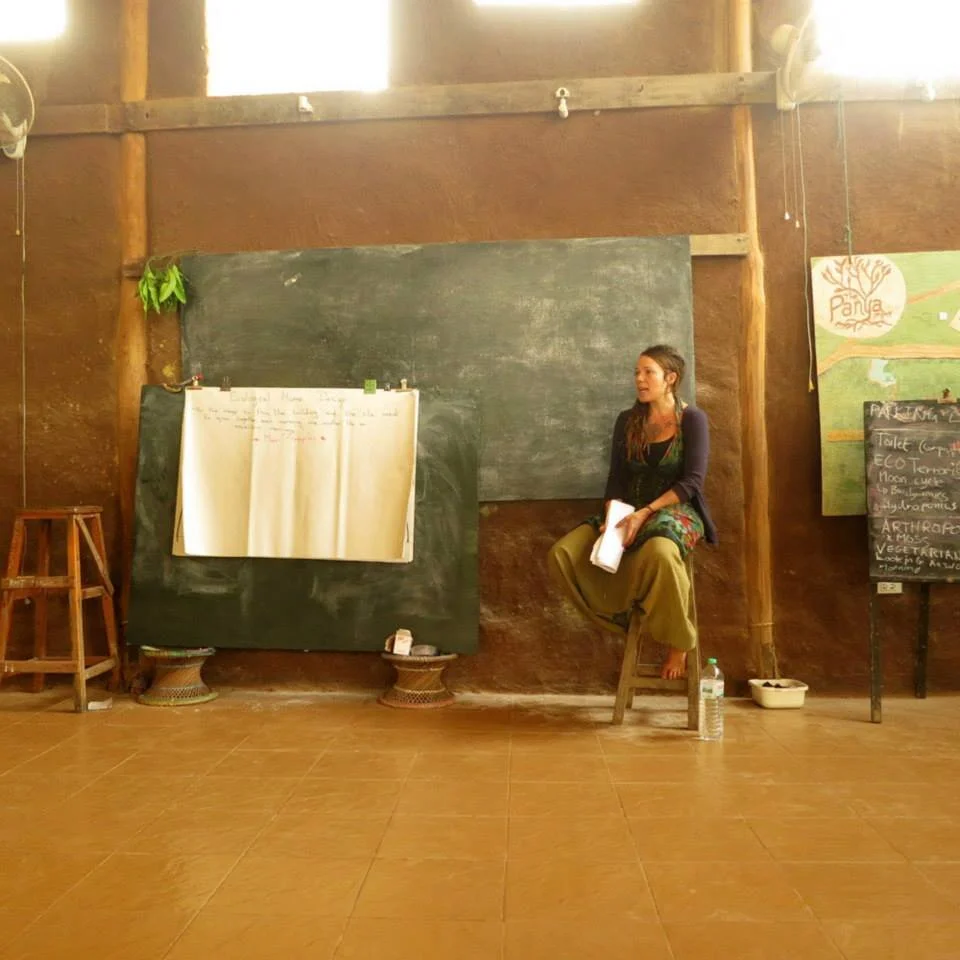
Lola Byron
Lola Byron is a Permaculture and Natural Building facilitator, practitioner and consultant. After travelling the globe with her young family, connecting with Permaculture projects, she now lives, works, teaches, builds and raises her 2 children in Southern Portugal. Originally from Birmingham, England, she has been a thriving Permaculturist and natural builder since completing her PDC back in 2010. Following this, she was an active urban Permaculturist, designing and implementing various community gardens and co-facilitating natural building and gardening workshops in and around the UK. With a background in studying, then teaching, Fine Art, Sculpture, when she discovered Permaculture and Natural Building, she knew she had found her calling in life. Lola recently set up The Women Natural Builders Collective, a safe and empowering learning space and network for women builders worldwide. She has built and taught internationally, spent 3 years as the Natural Building Manager at Panya Project, Thailand, and has been a consultant and project manager with Surplus Permaculture Design since 2017.
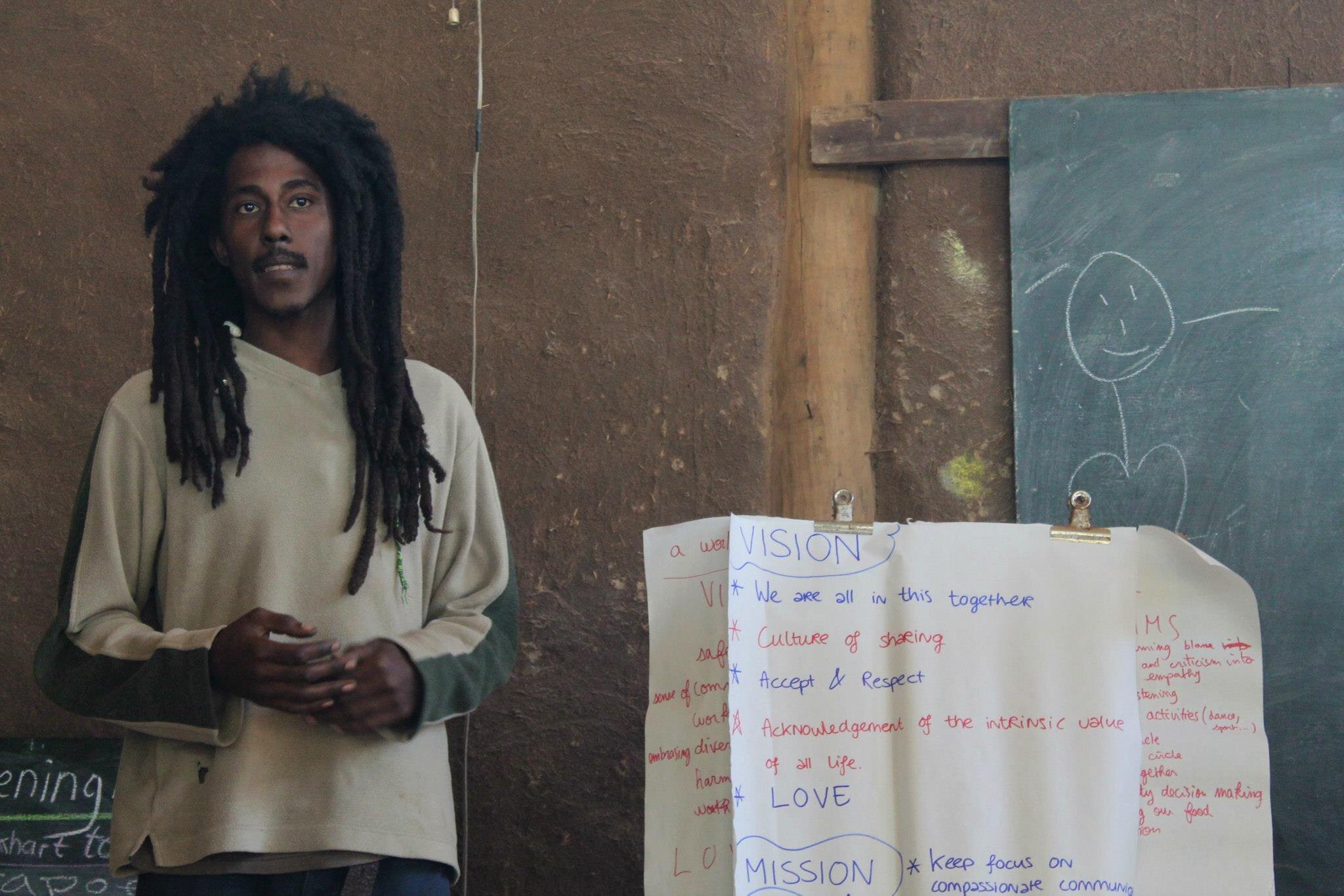
Kyle Smith
After practising horticulture and community living on a kibbutz in Israel when Kyle was 20, he was inspired to pursue a career in horticulture. During his studies, he completed an internship at Soil for Life, a Cape Town-based non-profit organisation empowering people to grow food and create healthy soil. Kyle went on to work at Kirstenbosch Botanical gardens in Cape Town, South Africa, where his primary focuses were conserving indigenous plant species, rehabilitating degraded ecosystems and designing and establishing education gardens on the grounds of the botanic garden. Kyle was later the perennial plant and nursery manager at Panya Project, Thailand, where he spent three years facilitating numerous permaculture design courses, organic gardening courses and designing and co-coordinating the volunteer and internship program. He is currently living in southern Portugal, consulting and teaching for Surplus Permaculture Design. Kyle is passionate about conserving soil ecosystems, plant propagation and small-scale ecological agriculture. He hopes to empower people to grow their own food, become more self-reliant, and regenerate a degraded ecosystem through his unique teaching style and depth of knowledge.