

Permaculture in Practice
with Kyle Smith
Five days on growing food through a hot, dry summer. March is the time of year to start focusing on summer growing: what to plant, how to prepare the ground, and how to keep it producing once the heat arrives.
This is not a lecture course. You learn by doing the thing, with the time and attention to understand why it is done that way.
No prior experience needed.
Join with a friend and receive 10% off • Early bird 10% available till 30 December • Portuguese residents 10% off • One offer per booking
Why Vegetable Production Needs to Change?
Most of us learned to grow vegetables in a climate that no longer exists here. Beds that used to dry out in August now dry out in June. Crops that carried through the summer stop producing. More watering is not a plan; it is a cost that rises every year.
This course is about creating resilience for summers that cook. Soil that holds moisture, timing that works with the heat rather than against it, crops and varieties that cope with it, and watering that does more with less.

The A Quinta da Lage Land as Classroom
A Quinta da Lage is a 130-hectare regenerative farm near São Luís in the Alentejo. It is not a demonstration site or a model garden. It is a working, evolving farm with active agroforestry systems, water-retention landscapes, regenerative agriculture, and a year-round community that lives and works here.
March sets the growing year here. The ground is warming, the last of the rain is arriving, and the long dry stretch is visible ahead. Whatever goes into the beds now, and how you prepare it, decides what you'll eat in August.
You will be in the growing areas and propagation spaces at the moment these decisions are actually being made, which is the only time this is worth learning.
For the duration of the course, you are part of the A Quinta community, sharing meals from the farm kitchen, participating in daily land work, and living within a place that has made a genuine commitment to doing things differently.
-
No prior experience is required. If any of this describes you, you are in the right place:
Anyone who wants to grow a meaningful amount of their own food
A gardener whose beds do well in spring and struggle by midsummer
Someone starting a vegetable garden and unsure where to begin
A smallholder or homesteader wanting to move from growing a bit to growing seriously
Someone who has completed a PDC and wants the productive, day-to-day end of it
Anyone growing in a hot, dry climate, or expecting to be
Anyone who wants to save their own seed rather than buy it every year
Someone who learns best by doing, observing, and reflecting
You do not need much land to benefit from this course. The planning and the growing skills scale down to a few beds as easily as they scale up.
-
Each day centres on direct engagement with the farm. Sessions connect practical work to the ecological thinking behind it.
You will:
Prepare beds for summer production, working with no-dig methods, compost, and mulch, and learn what a productive bed actually needs
Raise and plant out seedlings for summer crops, and get the timing right for your own conditions
Plan a growing season: what to grow, how much, spacing, succession, and rotation
Set up watering for a dry summer, and understand how to water less and better
Work with polycultures and companion planting, and approach pests and disease ecologically rather than reactively
Learn the ongoing care that keeps a garden producing: feeding, weeding, mulching, and paying attention
Spend a session on seed saving, covering which plants to select and why, keeping a variety true, harvesting, cleaning, and storing seed, and understanding that you decide next year's seed now, at planting, not at the end of the season.
You also have time to slow down, ask questions, and reflect. That rhythm of doing and noticing is where real learning happens.
-
A season plan you can take home and use
Practical bed preparation and planting skills
Confidence to keep a garden productive through a hot, dry summer
An understanding of watering that will save you both water and disappointment
The beginnings of a seed saving practice, and plants selected for your conditions rather than someone else's
The habit of reading a garden and responding, rather than following a calendar
About the Facilitator Kyle Smith
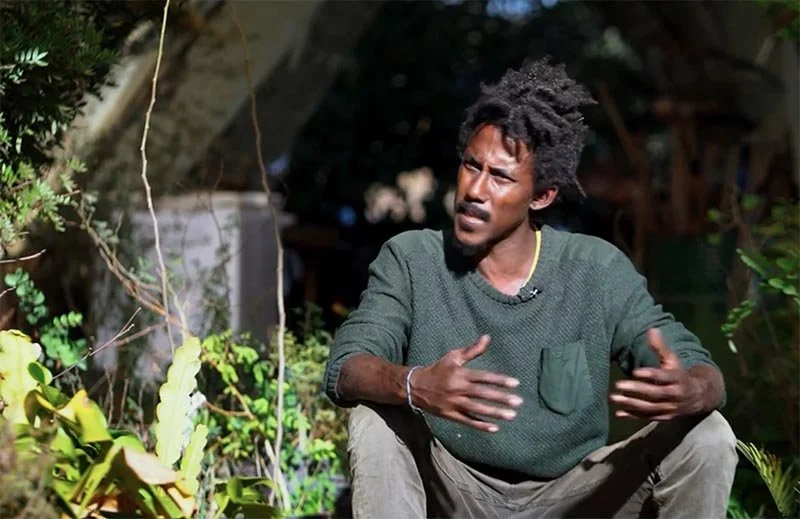
Kyle Smith has spent his adult life learning from land and sharing what he finds there. He trained in horticulture, completed an internship at Soil for Life in Cape Town, worked at Kirstenbosch Botanical Gardens, conserving indigenous plant species and establishing education gardens, and spent three years at Panya Project in Thailand, facilitating permaculture and organic gardening courses.
He is now based in southern Portugal, building Casa Tartaruga, a regenerative homestead rooted in small-scale food production, plant conservation, and propagation. His work centres on planetary regeneration through individual empowerment: the belief that education and hands-on capacity building, multiplied across many people and places, is one of the most meaningful contributions a person can make.
His teaching is unhurried, practical, and grounded in genuine curiosity about how living systems work.
Location & Logistics
Step into a lifestyle of regenerative practice on our 130-hectare farm. Beyond the canopy and the food forests, you’ll gain firsthand insight into intentional living and what it means to care for the land in cooperation with others.
Included in the fee:
● 3 wholesome vegetarian meals/day
● All tools, materials & tuition
● Stays in Campervan/Tent:
Private rooms/cottages available on request (extra fee).
Prices
€485 with your own caravan or tent
€555 with accommodation in dormitory
Join with a friend and receive 10% off • Early bird 10% available till 30 December • Portuguese residents 10% off • One offer per booking
We have private cottages, rooms and bell tents available, if you prefer this option please contact us to inquire about availability and pricing.
Your course fee supports both our facilitators and the ongoing regenerative projects at A Quinta.
How to Book:
Click "Book Now" to fill out our registration form.
After submitting, you will be redirected to Stripe link to pay a non-refundable deposit to secure your spot.
The remaining balance is due upon arrival (Cash or Bank Transfer).
Ready to join us?
We keep the group small, usually around 8 to 12 people. If this course has been on your mind, now is a good time.
Note: If we cancel the course, your deposit is refunded in full. If you cancel less than 7 days before the start, we ask for 75% of the total fee to cover our costs.